
Every year, the pharmaceutical industry earns close to $17 billion treating nail fungus infections that, by its own numbers, rarely go away for good. That's not an accusation. It's just arithmetic, according to Dr. James Carter, an integrative physician who has practiced in Nashville for more than three decades. “A cured patient doesn't come back to the pharmacy,” he says. “A patient who improves a little, watches the fungus return, and buys again is worth a great deal more to them.”
For years, Dr. Carter didn't think about it that way. He prescribed what the guidelines told him to prescribe, watched the same results come back, and sent patients to the same specialists. Then he started noticing a pattern he couldn't explain away.
The people who kept coming back weren't doing anything wrong, he says. They were consistent, they followed instructions, and the fungus still found its way back by the end of almost every case.
“I spent years treating the symptom. I never once asked what was protecting the fungus from everything I threw at it.” — Dr. James Carter
The number the industry doesn't lead with
Ask about the strongest oral medication available for nail fungus, the one most doctors reach for once creams stop working, and you'll hear plenty about its track record on paper. What you probably won't hear, Dr. Carter says, is its recurrence rate: up to 53% within a single year. More than half the people who take it, often for three straight months of liver-function monitoring because of the drug's documented hepatic risk, watch the fungus come right back before the year is out.
Topical treatments don't do much better, according to Dr. Carter, who points to the National Institutes of Health's own position: no conventional topical treatment has been shown to be truly effective against nail fungus. None of them. “People aren't using them wrong,” he says. “Every one of them was built without accounting for the one thing that actually matters.”
▶See the detail every conventional treatment misses →The “armor” no one told you about
What actually matters, in Dr. Carter's view, is something most patients have never heard of: biofilm. Researchers describe it as a dense, fat-based shell that fungus builds around itself, a barrier that can make the organism up to 1,000 times harder to eliminate than when it's exposed directly, according to research published in the Journal of Medical Microbiology.
Think of it less like a stain and more like a fortress, he says. “You can throw cream at that wall all day. You can throw a prescription at it. Both hit the wall and slide off, and the fungus stays inside, waiting for the treatment to pass.” The armor is made mostly of fat, Dr. Carter explains, so anything water-based beads up and slides off before it gets anywhere close. That covers nearly every cream, liquid, and diluted home remedy on the market.

That single detail, he says, is the real reason so many people have tried everything and watched it all fail. It was never about effort or bad luck. It came down to biology.
A pantry in rural Tennessee
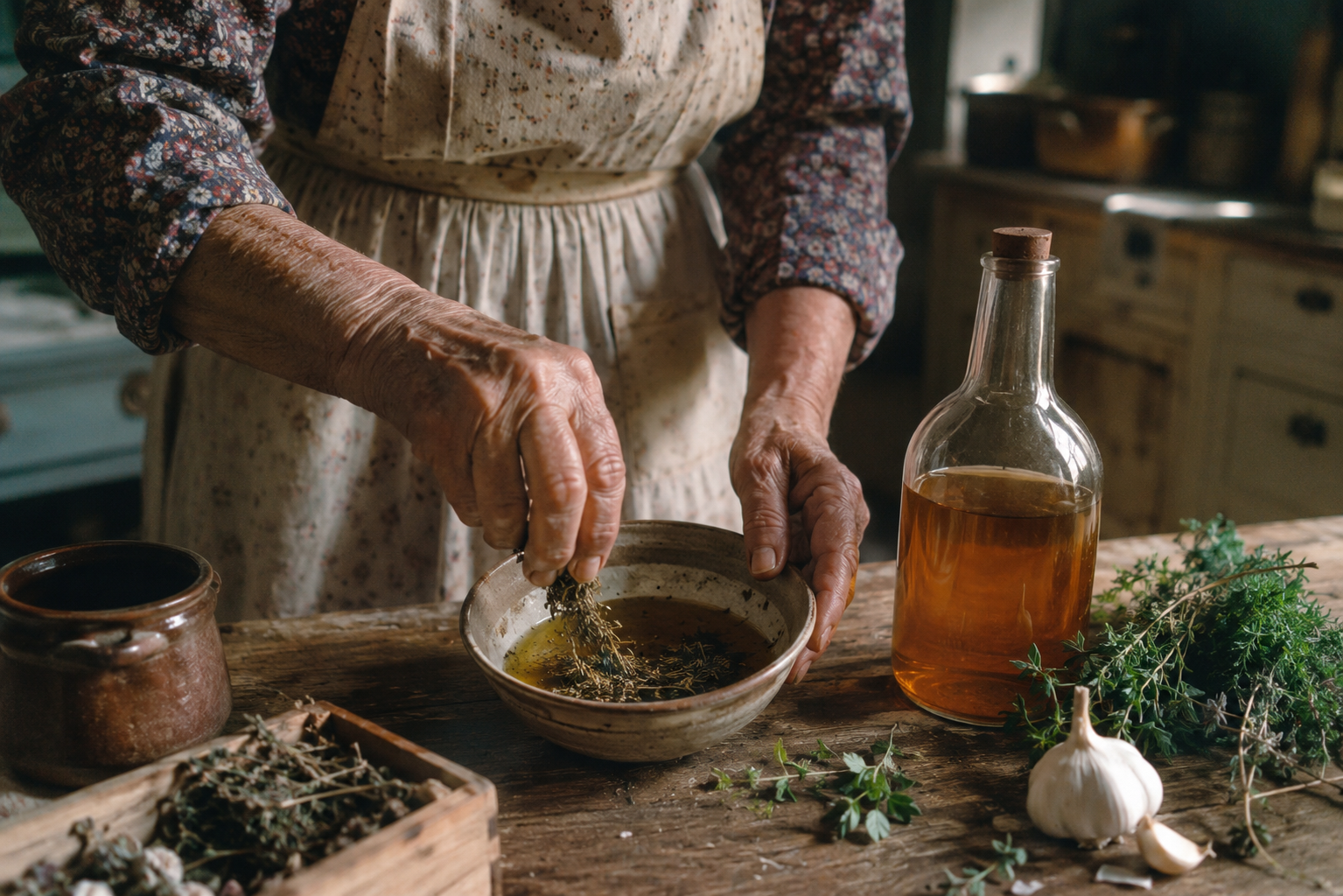
Dr. Carter grew up outside Nashville, raised by grandparents who didn't have a doctor nearby, only a pantry of home remedies passed down through the family. His grandmother had her own way of treating nail trouble, worked into an oil base instead of water. He dismissed it as folklore for most of his career. It took years of watching the same patients return, worse each time, before he let himself ask what she might have understood that he didn't.

The brother-in-law who had already given up
His own brother-in-law, Robert, had spent four years trying everything: pharmacy creams, diluted vinegar, tea tree oil, and finally a three-month course of the oral medication. It improved things slightly, then the fungus came back, and he was left with a liver enzyme count his doctor still monitors. “One more thing isn't going to change anything,” Robert told him. Dr. Carter asked for ten seconds a morning, and Robert agreed, mostly to end the conversation.
Within the first week or two, Robert noticed something before any visible change: an odor that had been there for years was gone. By the second month, his wife noticed the color returning without being told what he was doing differently. By the third month, Dr. Carter says, Robert stood barefoot at the edge of a pool with his grandchildren for the first time in years, without thinking about it once.
One person's experience. Individual results vary.

He describes something similar in a 71-year-old patient who, years earlier, had lowered her head in his office rather than let him see her feet. After trying what he'd learned from his grandmother's approach, she called one morning just to say she'd booked a pedicure for the first time in four years. The manicurist hadn't said a word about her nails. There was nothing left to say.
One person's experience. Individual results vary.
Cases like these are what convinced Dr. Carter that the industry's economics, not its science, were keeping so many people stuck cycling through the same treatments.
▶See why he says the numbers only work if you fail →What he tells patients now
Dr. Carter has since worked out the exact combination his grandmother never measured: which compounds, in what balance, delivered through an oil base instead of water. He lays out the full mechanism, the research behind it, and the protocol he recommends now, in a short presentation he recorded for people who've been exactly where Robert was.
If you've already tried the cream, the vinegar, and maybe the prescription, and you're tired of paying for the same disappointment on repeat, his explanation of why all of it was built to fail is worth ten minutes, in his own words.
Dr. Carter explains, in his own words, why the industry's numbers only work if your treatment doesn't, and what he says actually breaks through the armor.
▶ Watch Dr. Carter's Presentation